
FROM PREVIOUS DAVID WILCOCK BLOG;
http://sitsshow.blogspot.ca/2014/01/is-industrial-hemp-ultimate-energy-crop.html
Thursday, January 16, 2014
Is industrial hemp the ultimate energy crop?
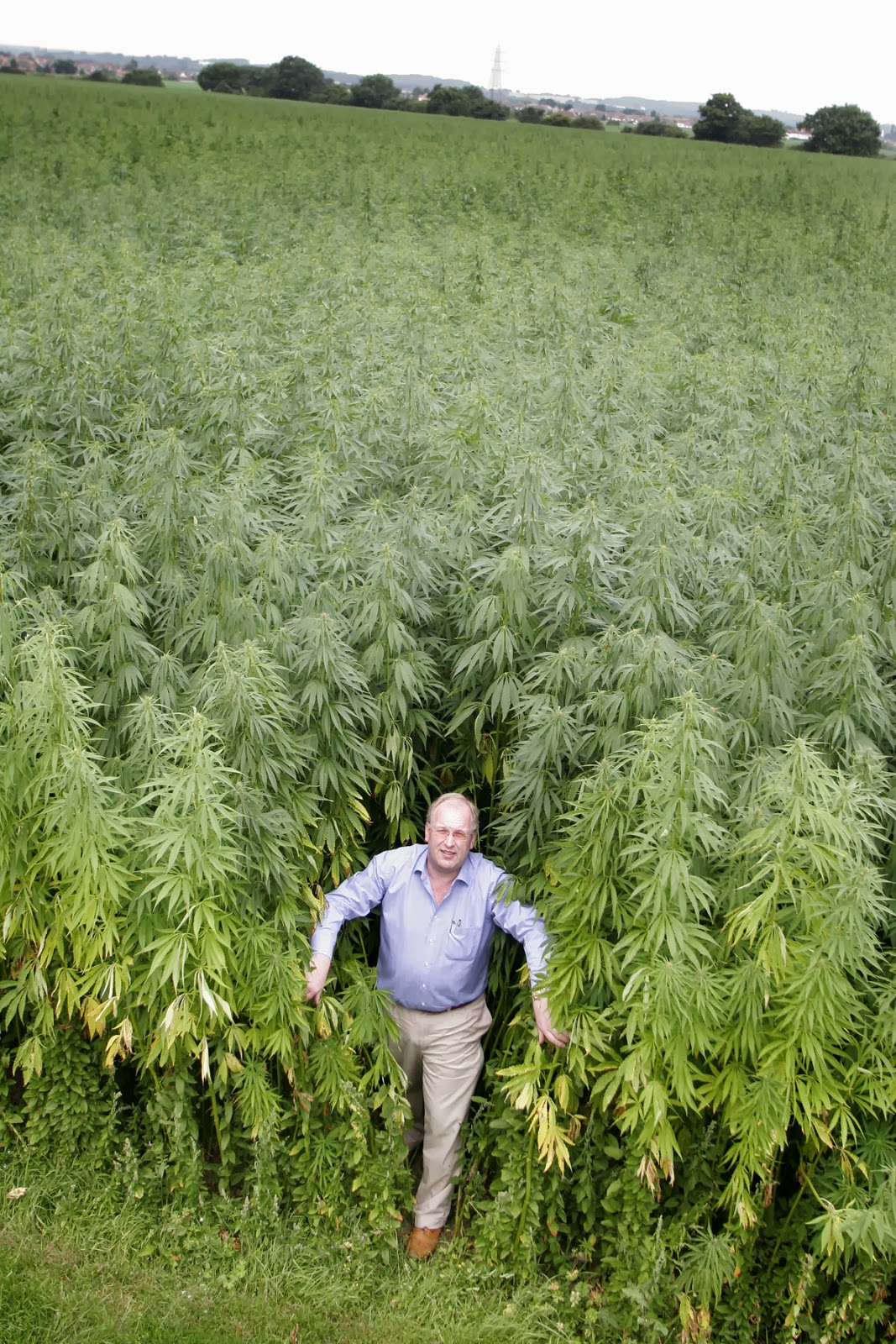
If we take all the data about Cannabis, Hemp, and Marijuana, its industrial uses, and medical applications, there are some big questions that come to mind.
How is it that Industrial Hemp can remove toxins from fields and rejuvenate the soil, while at the same time yielding an amazing raw material which can be applied to seemingly any industry? How is it that our human tech, the body, has an entire system which perfectly harmonizes with THC? TheEndocannabinoid system?
Finally, our human genome has about 200 genes that are totally foreign to planet Earth. Despite the myth that new genes are create via random mutation, thishas NEVER been observed in modern science, nor has there EVER been a new species or gene created in the over 500 years of breeding in western record keeping.
What does all this mean? To me, there is a strong probability, that Cannabis was either created by ancient megalithic human cultures for its societal and medical uses, or it was created by our space brothers to help us on Earth. I think given the available data, this is the most likely source of the Cannabis planet; despite modern sciences willful ignorance regarding the mechanics of Genes and their actual role on earth.
Source – Removing the Shackles
Did you know that the US first President George Washington grew Hemp?
By the way, did you know that the US Government/corporation owns all the patents on medical cannabis cures and treatments?
Hemp is one of the ultimate renewable resources of our planet. From paper, to fabric, to bio fuel, to medicine,……
and another article of interest in the hemp arena
http://removingtheshackles.blogspot.com/2013/05/hemp-could-free-us-from-oil-prevent.html
Original Article HERE: http://theconversation.com/is-industrial-hemp-the-ultimate-energy-crop-20707
2 January 2014, 7.45pm GMT

Thomas PradePostdoctoral Researcher at Swedish University of Agricultural Sciences
Disclosure StatementThomas Prade receives funding from the Swedish Farmers’ Foundation for Agricultural Research, the EU commission, the Skåne Regional Council and Partnership Alnarp.
The Conversation is funded by the following universities: Aberdeen, Birmingham, Bradford, Bristol, Cardiff, City, Durham, Glasgow Caledonian, Goldsmiths, Lancaster, Leeds, Liverpool, Nottingham, The Open University, Queen’s University Belfast, Salford, Sheffield, Surrey, UCL and Warwick.
It also receives funding from: Hefce, Hefcw, SAGE, SFC, RCUK, The Nuffield Foundation, The Wellcome Trust and The Alliance for Useful Evidence
 |
| Using industrial hemp for the production of bioenergy has been promoted by enthusiasts for a long time. Shutterstock |
Bioenergy is currently the fastest growing source of renewable energy. Cultivating energy cropson arable land can decrease dependency on depleting fossil resources and it can mitigate climate change.
But some biofuel crops have bad environmental effects: they use too much water, displace people and create more emissions than they save. This has led to a demand for high-yielding energy crops with low environmental impact. Industrial hemp is said to be just that.
Energy use of industrial hemp is today very limited. There are few countries in which hemp has been commercialised as an energy crop. Sweden is one, and has a small commercial production of hemp briquettes. Hemp briquettes are more expensive than wood-based briquettes, but sell reasonably well on regional markets.
Indeed, the environmental benefits of hemp have been praised highly, since hemp cultivation requires very limited amounts of pesticide. Few insect pests are known to exist in hemp crops and fungal diseases are rare.
 |
| Hemp has a broad climate range and has been cultivated successfully from as far north as Iceland to warmer, more tropical regions. Flickr: Gregory Jordan |
Being an annual crop, hemp functions very well in crop rotations. Here it may function as a break crop, reducing the occurance of pests, particularly in cereal production. Farmers interested in cultivating energy crops are often hesitant about tying fields into the production of perennial energy crops such as willow. Due to the high self-tolerance of hemp, cultivation over two to three years in the same field does not lead to significant biomass yield losses.
 saintandrewstwinflame